
Microcement Stockholm: Sourcing Quality Coatings for Modern Projects
01.Why Microcement Has Become Stockholm's Go-To Wall Solution
Stockholm's property market runs on minimalism. New builds, renovations, and commercial fit-outs all chase the same look: seamless surfaces, muted palettes, and materials that feel quiet rather than decorative. That is exactly why microcement has moved from boutique design showrooms into mainstream specification lists across the city.
The shift is not abstract. Over the past decade, Stockholm developers have standardized on large-format, joint-free finishes for apartments, offices, hotels, and retail spaces. Homeowners renovating post-war flats in Södermalm or new-build condos in Hammarby Sjöstad are choosing microcement over traditional tiles and plaster for bathrooms, kitchens, feature walls, and even floors. Designers specify it because it delivers a continuous plane without grout lines. Contractors value it because it can go over existing substrates without full demolition. Developers appreciate it because the material cost and application time remain predictable.
The real question for any professional operating in the Stockholm market is simple: how do you source microcement coatings that meet Scandinavian performance expectations while staying within project budgets?
The answer comes down to three things — material quality, application system flexibility, and supplier reliability. Each one directly affects whether a project lands on time, stays within budget, and delivers the finish the designer intended.
02.Microcement for Stockholm Interiors: Performance Meets Practicality
Stockholm's climate creates specific demands for interior coatings. Winters bring dry indoor heating that stresses wall surfaces. Summers bring humidity spikes from rain and melting snow tracked indoors. Bathroom and kitchen areas face constant moisture exposure. Any coating system chosen for this market needs to handle these cycles without cracking, yellowing, or losing adhesion.
Microcement systems from reputable manufacturers are engineered for exactly this kind of environment.
The core product offers several performance characteristics that align with Stockholm project requirements. It forms a thin, continuous layer between 2mm and 3mm thick. That thin profile means it does not alter door clearances, window operations, or furniture placement during renovation — a detail that matters significantly when working in tight urban apartments where every millimeter counts. Adhesion to existing substrates including tiles, cement boards, and gypsum is strong enough that contractors can apply microcement directly without full surface removal. This single capability cuts demolition waste, reduces labor hours, and shortens project timelines compared to traditional resurfacing methods.
Water resistance is another critical factor. Properly formulated microcement with a compatible sealing topcoat creates a waterproof barrier suitable for wet rooms, shower enclosures, kitchen splashbacks, and bathroom vanities. This opens application possibilities that traditional decorative plasters simply cannot match. A single product covering walls, floors, countertops, and built-in furniture within the same space is increasingly common in Stockholm residential projects — designers call it unified surface continuity,and clients respond to the visual coherence it creates.
Construction flexibility separates good microcement suppliers from mediocre ones. The best systems support both spray application for large-area efficiency and hand troweling for detail work and texture customization. Spray application is particularly relevant for commercial projects and multi-unit residential developments where speed matters. A crew trained on spray technique can cover significantly more square meters per day than pure manual application, reducing labor costs and accelerating project turnover. For custom residential work where specific textures or edge treatments are required, the trowel method remains essential. A supplier offering both pathways gives contractors the flexibility to match their team's skill set and the project's demands.

Color and texture range determines how widely a microcement product can be specified. Stockholm interiors favor earth tones, soft grays, warm whites, and occasional deeper accents. A comprehensive color palette lets designers stay within the Nordic aesthetic without ordering custom batches. Texture options — smooth, subtle matte, light sandblast effects — add another layer of specification control. When a supplier can provide both standardized colors and limited custom mixing, it covers the majority of project requirements without long lead times.
03.Microcement Microcement Supplier Comparison: What Matters for Stockholm Projects
Not every microcement product available on the market is suitable for the Stockholm specification standard. The table below breaks down the key evaluation dimensions and how they translate into real project decisions.
The differences in this table are not theoretical. They show up directly in project outcomes.
A budget supplier might offer attractive unit pricing, but if the formula lacks proper water resistance, the coating will degrade in a Stockholm bathroom within two to three years. If technical support is unavailable, a contractor working on a hotel renovation may spend days troubleshooting application issues that could have been resolved with a single phone call. If export documentation is incomplete, shipments can stall at customs — a delay that cascades into schedule overruns and client disputes.
A mid-range supplier narrows some of these gaps but still often falls short on certification coverage and application system flexibility. For contractors handling multiple project types — residential renos, commercial interiors, hospitality fit-outs — limited spray compatibility and narrow color ranges become operational constraints that slow down quoting and execution.
A premium supplier like THE AIKE addresses these gaps systematically. Advanced water-based formulas comply with strict European and international environmental standards, which matters increasingly as Swedish building codes and green certification requirements tighten. Full export compliance with complete trade documentation prevents shipping delays. The dual spray-and-trowel system means a single product line serves both high-volume commercial work and detail-oriented residential projects. And the dedicated technical team provides guidance throughout the project lifecycle, from initial specification through application to final quality check.
04.How to Select a Microcement Supplier for Stockholm Market Projects
Choosing the right supplier is a decision that echoes across the entire project lifecycle. Here is a practical framework for making that choice, structured around the specific needs of professionals working in the Stockholm and broader Scandinavian market.
Step One: Verify Certification and Compliance Documentation

Any supplier you work with must provide complete certification documentation before you commit to a purchase. For the Stockholm market, this means checking for compliance with European environmental standards and any specific Swedish building requirement labels your project may need. Certifications are not optional paperwork — they are the difference between a smooth customs clearance and a shipment held at port for weeks. Request the full certificate package upfront and verify each document against your project's specification requirements.
Step Two: Assess Application System Flexibility
Ask specifically whether the microcement system supports both spray and trowel application. If the supplier only offers trowel application, evaluate how that limitation affects your project pipeline. Spray-compatible systems expand your ability to bid on larger commercial projects where labor time directly impacts profit margins. For smaller residential jobs, trowel application remains perfectly adequate. Having both options available means your company is not locked into a single project type.
Step Three: Evaluate Technical Support Depth
Technical support is where most supplier relationships either strengthen or break down. A supplier that offers full-process technical empowerment — covering construction methodology, color matching guidance, and on-site problem solving — reduces risk for contractors and developers alike. Before placing an order, request a sample technical consultation. Ask specific questions about substrate preparation, mixing ratios, curing times, and topcoat application. The supplier's responsiveness and depth of knowledge during this pre-sales phase is a reliable indicator of the support you will receive during actual project execution.
Step Four: Compare Total Project Cost, Not Just Unit Price
Unit price comparisons are misleading if they ignore the full cost picture. A cheaper microcement product may require additional primer layers, more sealing coats, or longer curing times — all of which add material and labor costs. Calculate total installed cost per square meter, including primer, intermediate layers, topcoat, and estimated labor hours for your specific application method. The product with the lowest unit price is rarely the most cost-effective solution when installed.
Step Five: Confirm Export and Delivery Reliability
If you are sourcing from an international supplier, delivery reliability is as important as product quality. Inquire about lead times, shipping routes to Scandinavia, and documentation readiness. A supplier with mature export operations will have established logistics chains that deliver consistent arrival times. For time-sensitive projects in Stockholm's competitive construction market, delivery uncertainty is a real business risk.
05.Microcement Stockholm: Building Projects That Last
Microcement is no longer a niche material in Stockholm. It has become a specification standard for modern interiors because it delivers what the market demands: seamless aesthetics, practical performance, and cost predictability. The companies that succeed in this market are the ones that choose their suppliers carefully and build their specifications around materials and support systems they can rely on.
For contractors, the right microcement supplier means fewer application problems, faster project turnover, and healthier profit margins. For designers, it means materials that execute the vision without compromise. For developers and distributors, it means products and partnerships that deliver consistent quality across multiple projects.
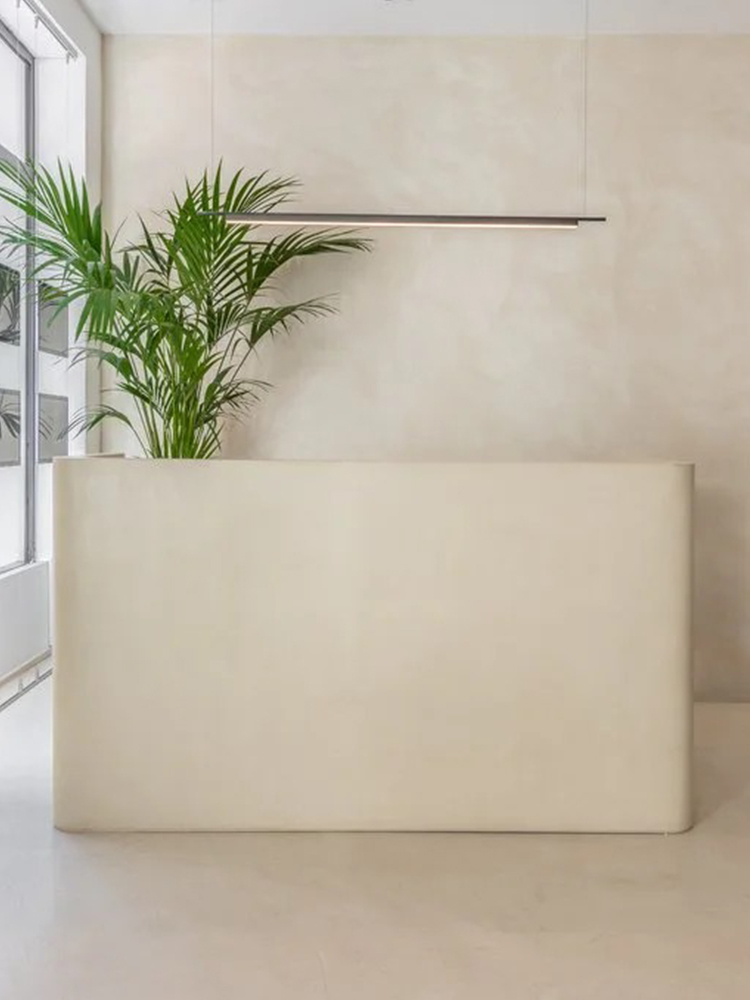
The Stockholm market rewards professionals who treat material sourcing as a strategic decision rather than a purchasing afterthought. The right microcement system — one with proven performance, flexible application options, complete certification coverage, and genuine technical support — becomes an asset that compounds across every project it touches.
06.Why Choose Us
Advanced Water-Based Formula Meeting Global Standards
Our microcement products use eco-friendly water-based formulas that comply with international environmental standards, making them suitable for strict European and Scandinavian market requirements. Low VOC output ensures healthy indoor environments for residential and commercial projects alike.
Dual Application System for Maximum Project Flexibility
Our microcement supports both spray and trowel application methods, giving contractors the flexibility to handle large-scale commercial projects efficiently while maintaining precision for detailed residential work. This dual-system approach reduces equipment investment and expands the range of projects your team can tackle.
Full-Process Technical Empowerment from Experienced Specialists
Our core team brings over 20 years of coatings industry expertise and 16+ years of construction sector experience. We provide end-to-end technical support covering substrate preparation, application methodology, color matching, and on-site troubleshooting — ensuring your projects proceed smoothly from specification through completion.
Complete Export Documentation and Reliable Global Delivery
With mature export operations serving clients across six continents, we provide all necessary trade documents and certifications to support smooth customs clearance and project compliance. Reliable logistics and clear communication keep your supply chain moving without delays.
Ready to elevate your Stockholm projects with premium microcement solutions? Contact us today for a free product sample and customized coating solution tailored to your specific project requirements.
“ Contact AIKE Team ”
__________
在线留言
Name*
E-mail*
Country*
Application Areas*
Tel / WhatsApp
Requirement
Business Supervisor:Mr. Bin Zhu


Social media account


