
Microcement Finish Without Demolition
Stop Paying for Demolition: Why Contractors Are Switching to Microcement Finish
Every renovation project starts with the same expensive question: "Do we strip the walls?" For a 1,200 m² hotel lobby in Dubai or a chain-restaurant fit-out in Southeast Asia, that single decision adds three to five weeks and $15–$40 per square meter in labor, waste disposal, and substrate repair. Contractors who have already locked a tight budget lose margin before the finishing stage even begins.
Microcement finish changes that equation. At 2–3 mm thickness, it bonds directly to ceramic tile, cement board, gypsum plasterboard, and sealed concrete—no sanding, no demolition, no re-plastering. The surface comes out seamless and joint-free, eliminating the grout lines and seams that plague tile-based designs.
One Crew, Two Methods: The Spray + Trowel Logic
The microcement finish system runs in two application modes. Large-area walls, commercial corridors, and showroom floors go through a spray pass—a uniform base coat laid down in minutes per meter, cutting labor roughly 40 % versus full trowel work. The trowel pass then builds the decorative texture: cement-look, stone-vein, or industrial matte, shaped to the design brief. For a contractor bidding on a 5,000 m² mixed-use development, one crew handles both the fast base and the detail work without subbing out a second specialist.

Because total build-up stays under 3 mm, door and window frames don't need re-trimming, floor thresholds remain unchanged, and furniture delivery isn't delayed. In hardbound-room upgrades—bathrooms, kitchen backsplabs, feature columns—that thickness constraint is the difference between a clean install and a full substrate rebuild.
Matching the Right Project to the Right Application
Bathroom & kitchen retrofits: Applied straight over existing ceramic tile; the waterproof formula plus sealing top coat forms a closed moisture barrier, so you skip the 25 mm tile-removal-and-retile cycle.
Hotel & resort refreshes: One product line covers feature walls, interior columns, and lobby floors in a single supply—no color-matching across three vendors.
Chain-brand roll-outs: The spray base standardizes finish quality across 20+ locations, keeping the look consistent while local crews handle the trowel detail.
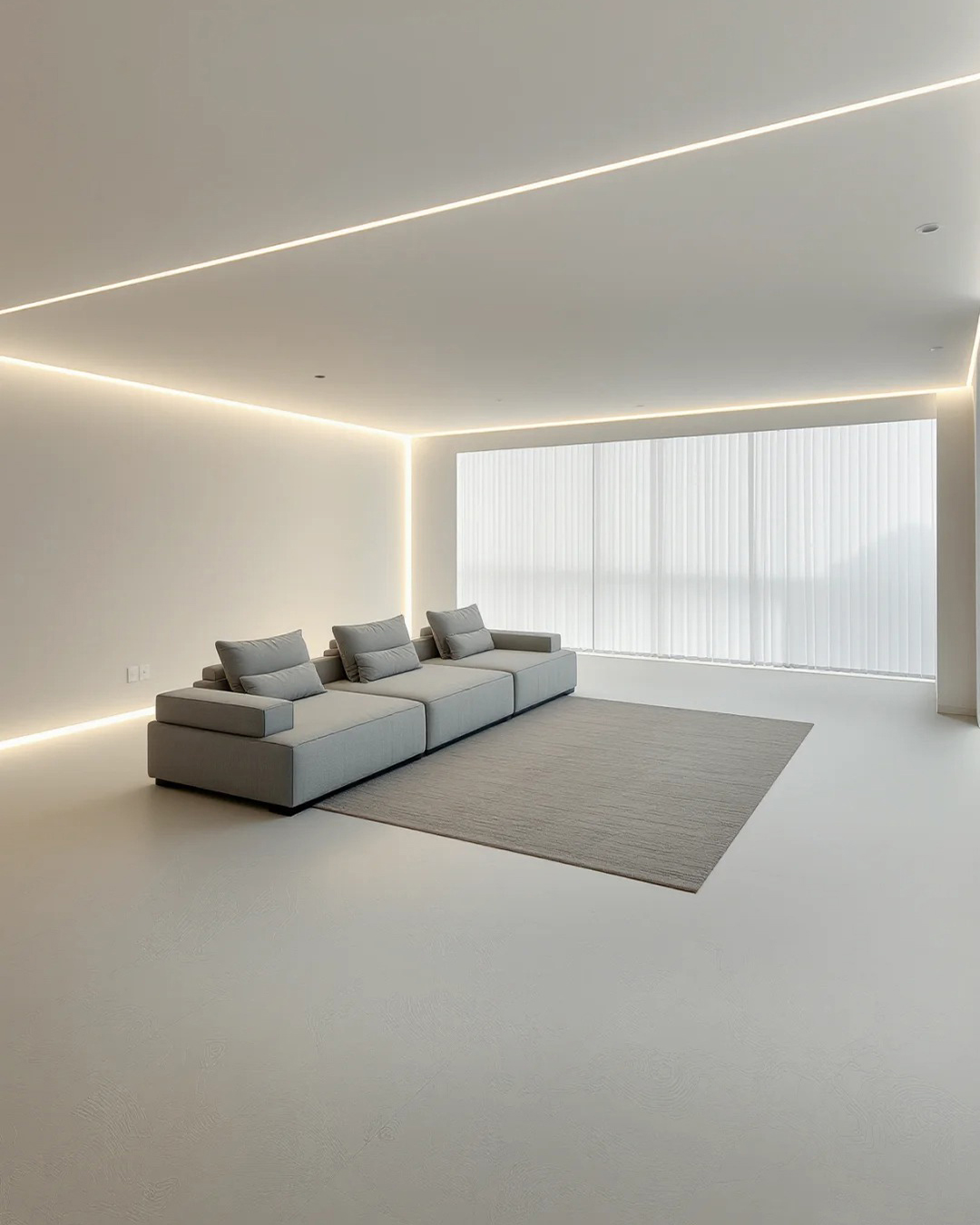
The Numbers: Old Substrate Method vs. Microcement Finish Over Existing Surfaces
On a 2,000 m² commercial fit-out, skipping demolition saves roughly $80,000–$120,000 in labor and disposal and compresses the schedule by three to four weeks.
The Bottom Line
For contractors, the math is direct: a microcement finish that applies over existing substrates protects your labor budget, shortens the critical path, and keeps the client's timeline intact. For designers, it opens a cement-and-stone language that tile simply can't replicate without grout lines. For developers and distributors, one supplier covering walls, floors, and feature surfaces cuts procurement complexity and locks in consistent quality across a full project.
Why Choose THE AIKE for Your Microcement Finish Project

Direct-over-surface adhesion: Formulated to bond to tile, cement,gypsum, and sealed concrete without removal—built for renovation and retrofit workloads.
Dual spray + trowel system: One product, two modes. Large-area efficiency for engineering bids; hand-crafted texture for design-led spaces.
Full-category, single-supply model: Microcement, stucco texture, lime wash, and all-functional paint from one system—unified quality, one supply chain, no cross-vendor color-matching.
VOC-free, globally certified: Water-based formulas meeting EU, US, and Middle East green-building standards, with complete export documentation ready for cross-border projects.
Contact us today for a free product sample, a substrate compatibility check, and a customized microcement finish application plan for your next project.
“ Contact AIKE Team ”
__________
在线留言
Name*
E-mail*
Country*
Application Areas*
Tel / WhatsApp
Requirement
Business Supervisor:Mr. Bin Zhu


Social media account


