
Microcement Shower: Is It Really Waterproof? A Complete Guide for Contractors and Designers
Introduction: Why Microcement Showers Are Gaining Traction in Commercial and Residential Projects
Walk into any modern hotel bathroom or high-end residential renovation in 2026, and you’re increasingly likely to see a seamless, monolithic shower surface—no tiles, no grout lines, no plastic pan. That surface is microcement. For contractors, interior designers, and developers working on bathroom renovations, microcement has become a go-to specification. The promise is compelling: a joint-free, waterproof, stylish finish that transforms a shower area into a sculptural space. But the reality of specifying microcement in a wet area like a shower is far more nuanced than the glossy Instagram photos suggest.
This article cuts through the marketing. We will address the real, on-the-ground questions every contractor, designer, and project manager asks before committing to a microcement shower: Is it waterproof? How do you install it correctly? What are the risks of failure? And how do you choose the right product and supplier to avoid costly callbacks? We’ll compare microcement against traditional tile and acrylic liners, and show you how to make a confident, informed decision for your next project.
Core Content: The Realities of Microcement in a Shower Environment
1. Waterproofing Is About the System, Not the Appearance
The single biggest misconception about microcement in a shower is that the material itself acts as a waterproof membrane. It does not. Standard microcement is a decorative, cement-based finish applied at 2–3 mm thickness. It is highly durable and water-resistant, but it is not a primary waterproof barrier. True waterproofing in a microcement shower comes from the full system: a properly installed liquid waterproof membrane beneath the microcement, sealed at all joints, corners, and floor drains.
For contractors: This means you cannot simply apply microcement over drywall in a shower. The substrate must be waterproofed first using a compatible liquid membrane. THE AIKE’s system,for example, includes a specialized primer and sealant layer that, when combined with the microcement top coat and a high-performance sealer, creates a complete waterproof envelope.
2. The Critical Role of the Sealer and Top Coat
Microcement is porous. Without a proper sealer, water will penetrate the finish, leading to staining, efflorescence, and eventual delamination. In a shower—where water is constantly splashing and steam is present—the sealer is your first line of defense.
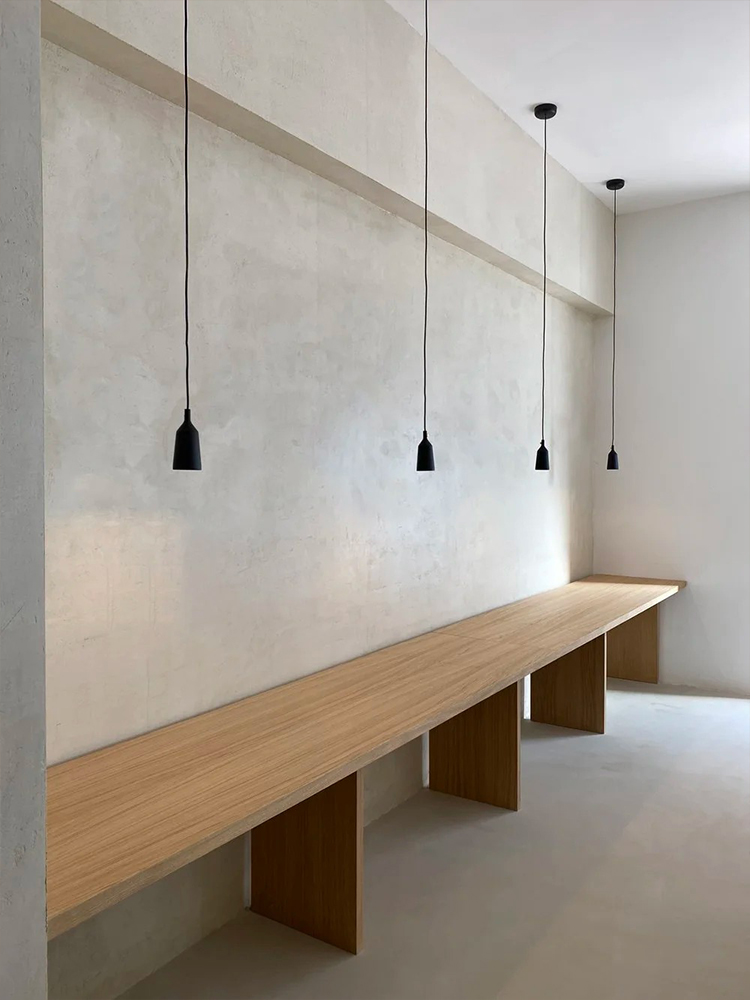
For designers: You must specify a two-coat sealer system: a penetrating sealer that soaks into the microcement and a surface top coat that provides a durable, stain-resistant, and water-repellent finish. High-traffic commercial showers in hotels or gyms require a polyurethane-based sealer for maximum abrasion and chemical resistance, while residential showers can use a high-quality acrylic or hybrid sealer.
3. Joint Detailing: The Most Common Failure Point
Tiled showers fail at the grout lines. Microcement showers fail at the junctions: where the wall meets the floor, around the drain, at corners, and at the shower valve trim. These are movement points, and microcement, while flexible, is not a rubber membrane. If the substrate moves or if the drain flange is not properly integrated, cracks will appear—and water will find its way behind the finish.
The solution is meticulous joint detailing. Every internal corner should be reinforced with a flexible waterproof tape and embedded in the liquid membrane before microcement application. The drain must be a “linear” or “point” drain designed for thin-set finishes, with a bonding flange that the microcement can be troweled directly onto.
4. Application Sequence for a Microcement Shower
For contractors, here is the correct sequence for a reliable microcement shower installation:
1. Substrate Preparation: Ensure the substrate (cement board, tile backer, or existing tile) is clean, dry, and structurally sound.
2. Waterproof Membrane Application: Apply a liquid waterproof membrane (e.g., THE AIKE’s compatible waterproof system) in two coats, extending 6 inches up the walls and across the entire floor. Reinforce all corners and joints with waterproof tape.
3. Primer Coat: Apply a microcement-specific bonding primer to the waterproofed substrate.
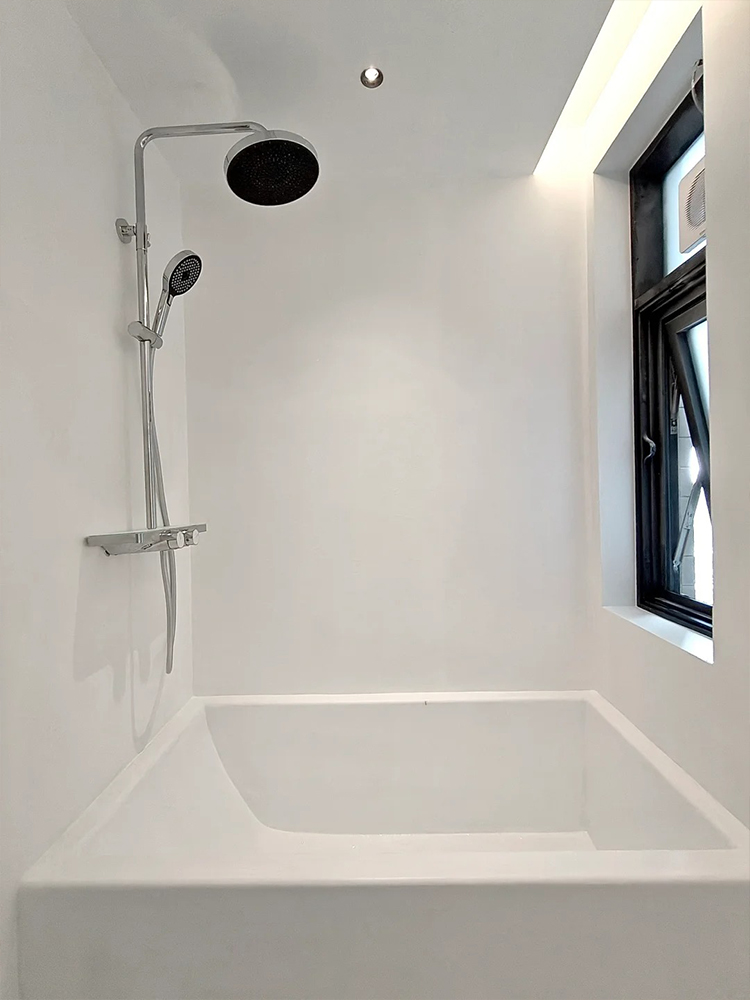
4. Microcement Base Coat: Apply the first coat of microcement (e.g., THE AIKE Microcement Base). Allow to cure.
5. Microcement Top Coat: Apply the second coat, creating the desired texture and finish.
6. Sealer Application: Apply two coats of sealer: first a penetrating sealer, then a surface top coat. Allow full cure before water exposure (typically 24–48 hours).
Comparison Module: Microcement vs. Tile vs. Acrylic Liner for Showers
Key Takeaway: Microcement is not a “cheap” or “fast” solution for a shower. It is a high-value, design-led solution that requires skilled application and a full system approach. For contractors and designers targeting premium projects, it offers a unique aesthetic and functional value that tile and acrylic cannot match.
Content Summary: Key Decisions for a Successful Microcement Shower
Specifying a microcement shower is a decision driven by design ambition—but executed through technical discipline. The most successful projects share three common traits: a full waterproofing system underneath the microcement, meticulous joint and drain detailing, and the use of a high-quality, compatible sealer. Skipping any of these steps is an invitation for failure.
For contractors, the shift from tile to microcement requires retraining your team on proper substrate prep and joint reinforcement. For designers, the trade-off is a truly seamless, elegant bathroom versus the potential for higher installation risk. For developers and distributors, the key is partnering with a supplier that provides not just the product, but the full system—primer, membrane, microcement, and sealer—and the technical support to ensure correct application.
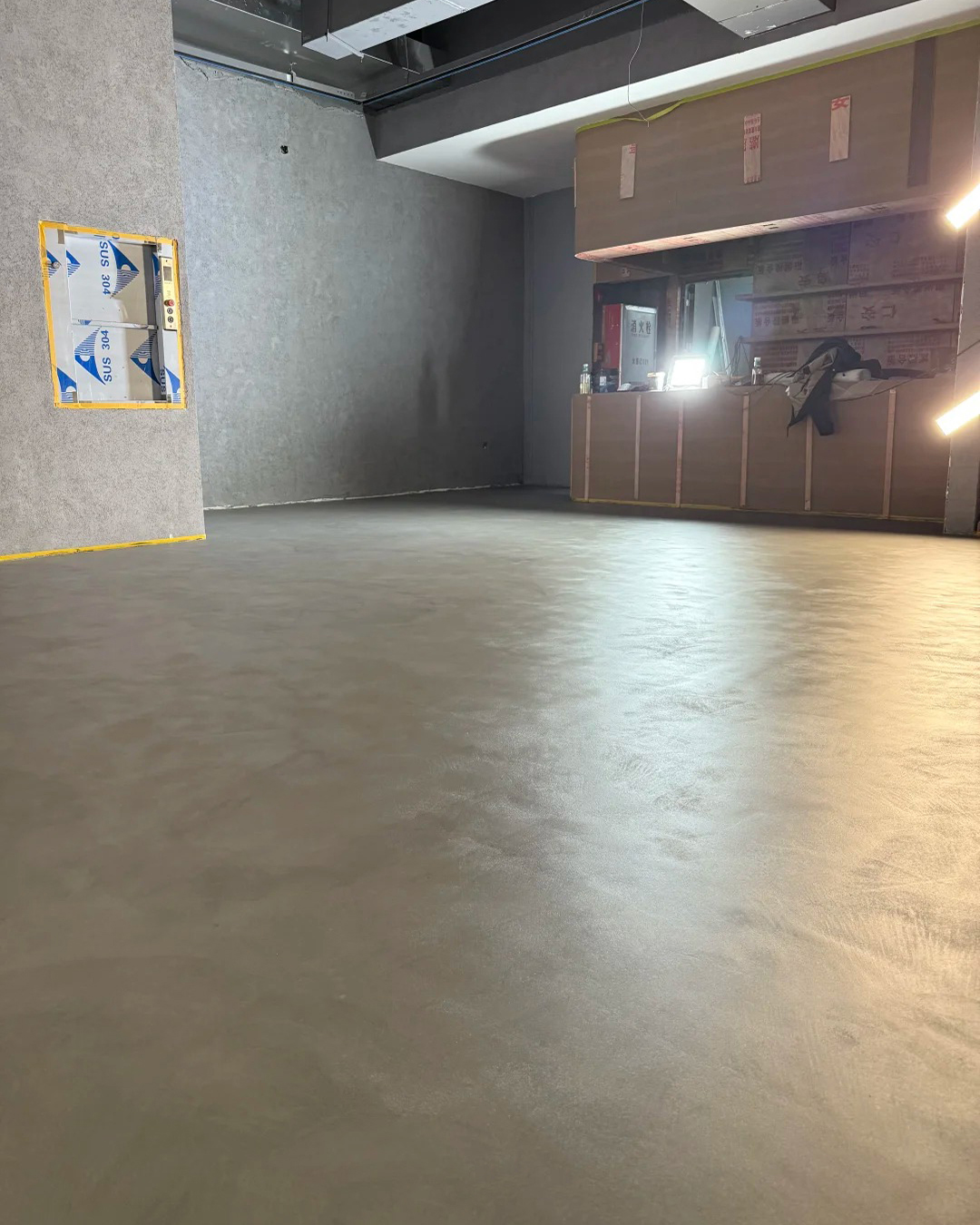
When done right, a microcement shower delivers a durable, waterproof, low-maintenance finish that elevates the entire bathroom into a work of art. When done wrong, it becomes a costly, messy problem. The difference is knowledge, process, and the right partner.
Why Choose Us: THE AIKE – Your Partner for High-Performance Microcement Shower Systems
At THE AIKE, we don’t just sell microcement. We provide a complete, engineered system for wet areas, backed by 20+ years of coatings industry expertise and 16+ years of construction experience. Here’s why contractors and designers trust us for microcement shower projects:
Full-System Compatibility: Our microcement is designed to work seamlessly with our waterproof membrane, primers, and high-durability sealers. One supplier, one trusted system—no compatibility guesswork.
Proven Waterproof Performance: We have tested and certified our microcement shower system to withstand continuous water exposure, with a specialized sealant and top coat that prevent water ingress and staining.
Technical Empowerment for Contractors: Our senior expert team provides full-process technical support, from substrate preparation guides to on-site training. We reduce your installation risk and help your team master microcement application faster.
Global Compliance and Cost-Effective Quality: All our products are eco-friendly, water-based, and VOC-free, meeting international green building standards. And we deliver this premium system at a reasonable price, protecting your project margins.
Ready to specify a microcement shower that performs as beautifully as it looks? Contact us today for a free product sample and customized coating solution for your next bathroom project.
“ Contact AIKE Team ”
__________
在线留言
Name*
E-mail*
Country*
Application Areas*
Tel / WhatsApp
Requirement
Business Supervisor:Mr. Bin Zhu


Social media account


