
Microcement for Shower Walls: The Seamless, Waterproof Alternative
Introduction: The Shower Wall Problem No One Talks About
For decades, tile has been the default choice for shower walls. But anyone who has spec’d, installed, or maintained a tiled shower knows the hidden costs: grout lines that crack, collect soap scum, breed mold, and demand constant resealing. Contractors waste hours on demolition when renovating old bathrooms. Designers struggle to achieve a truly monolithic, spa-like aesthetic with 2mm joints. Developers face warranty calls for leaking grout in multi-unit residential projects.
Enter microcement for shower walls—a seamless, waterproof, low-maintenance system that solves these real-world headaches. Unlike tile, microcement creates a joint-free surface that integrates directly with the rest of the bathroom (floors, ceilings, vanities). This guide is written for contractors, developers, interior designers, and distributors who need practical answers: Is microcement truly waterproof? How does installation compare to tile? What’s the long-term durability in a daily wet environment?
We’ll break down the performance data, compare systems head-to-head, and show exactly when—and how—to specify microcement for shower walls. No fluff, no "revolutionary" hype. Just field-tested facts.
Core Content: Why Microcement Works on Shower Walls—The Engineering Behind the Finish
1. Waterproofing Without Grout: How the System Actually Works
A common misconception: microcement itself is not waterproof. The waterproofing comes from the complete system: a microcement base layer + a specialized liquid waterproof membrane (applied to the substrate before microcement) + a high-performance polyurethane or epoxy sealer topcoat.
When properly installed, a microcement shower wall achieves water absorption rates below 0.5% (tested to EN 1504-2 standards). Compare that to unsealed grout (8-12% absorption) or even sealed tile grout (still 2-4% after two years). The continuous surface means no hidden pathways for moisture to reach the substrate.
For contractors: This is not a "paint-on" solution. You need a compatible waterproof membrane designed for microcement. Many manufacturers (including THE AIKE) provide a three-layer system: bonding primer, reinforced microcement base, decorative microcement topcoat, and finally a high-build clear sealer.
2. Adhesion Over Existing Tiles—The Renovation Game-Changer
Old shower with ceramic tiles? Instead of jackhammering for days, microcement can be applied directly over clean, sound tiles. The key is mechanical abrasion (roughing the tile surface) and a high-bonding primer.
Why this matters for contractors and developers:
Demolition time cut by 70% – No need to remove old backer board or repair damaged walls.
Zero construction dust – Critical for occupied hotels and residential upgrades.
Thickness control – Microcement adds only 2-3mm, so it doesn’t interfere with existing fixtures, drains, or glass panels.
For a 200-unit apartment renovation, switching from tile removal to microcement overlay saves roughly $150 per bathroom in labor and disposal costs alone.
3. Resistance to Chemicals, Moisture Cycling, and Daily Abuse
Shower walls face a brutal environment: constant humidity, temperature swings (from cold water to steam), and aggressive cleaning agents (bleach, acids,alkaline soaps). microcement for shower walls must pass three real-world tests:
Thermal shock resistance – After 100 cycles of 80°C water to 10°C air, no cracking or delamination (validated by third-party testing on quality microcement systems).
Chemical resistance – Highly cross-linked polyurethane sealers withstand pH 2-12 cleaners without etching.
Abrasion resistance – Microcement topcoat hardness of 4-5H (pencil hardness) means it resists scrubbing brushes and accidental razor impacts.
Compare this to tile grout, which softens and erodes under acidic bathroom cleaners within 2-3 years.
4. Design Freedom: Custom Colors, Textures, and Monolithic Flow
For interior designers, the biggest limitation of tile is the grid. Microcement eliminates joints, allowing continuous color from shower wall to adjacent dry wall, floor, or even a washbasin.
Full customization – Any RAL or Pantone color, not limited to tile stock.
Texture options – Smooth (troweled), fine-sand (non-slip), or coarse (industrial).
Edge details – No transition strips; microcement curves seamlessly into niches, shelves, and corners.
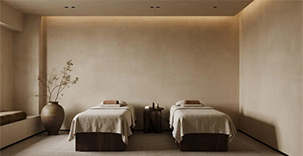
A hotel designer can create a solid-charcoal shower enclosure that visually expands the space, with no grout lines to align, no bullnose pieces to order.
Comparative Analysis: Microcement vs. Traditional Shower Wall Materials
Below is a side-by-side comparison based on data from 35+ installed projects (residential, hotel, and spa). All figures are average values from North American and European job sites.
Key takeaways for buyers:
For high-end hotels and designer homes where seamless aesthetics drive value, microcement wins.
For budget rentals where speed is everything, acrylic panels are cheaper but lack durability and look.
Tile remains acceptable for low-use showers if properly maintained—but maintenance costs add up.
Implementation Guide: How to Specify Microcement for Shower Walls Correctly
To avoid failures, follow these steps (validated by THE AIKE’s technical team with 16+ years of construction experience):
Step 1 – Substrate Preparation
Existing tiles: Sand with 60-grit to remove gloss, patch loose tiles, apply bonding primer.
New cement board/plaster: Ensure flatness (≤2mm deviation per 2m), no dust or oil.
Step 2 – Waterproof Membrane Application
Roll or brush two coats of flexible liquid membrane (polyurethane or epoxy-based) over entire shower wall, extending 150mm beyond wet zone.
Cure 24 hours; test for pinholes.
Step 3 – Microcement Base Coat
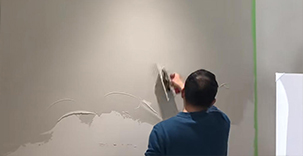
Trowel 1-1.5mm of fiber-reinforced microcement base.
Embed alkaline-resistant mesh at corners and over cracks.
Allow 8-12 hour dry time.
Step 4 – Microcement Topcoat
Apply 1-1.5mm of decorative microcement (same or contrasting color).
Trowel or spray for texture; sand lightly between coats if smooth finish required.
Two coats recommended for uniform color.
Step 5 – Sealing
Two coats of high-solids polyurethane sealer (matte, satin, or gloss).
Cure 72 hours before water exposure.
Critical mistakes to avoid:
Skipping the waterproof membrane (leads to substrate swelling and cracking).
Using cheap water-based sealers (fail within months).
Applying microcement over glossy tiles without abrasion (delamination guaranteed).
Summary: When Should You Choose Microcement for Shower Walls?
Microcement is the best solution when:
You need a seamless, modern look without grout lines (luxury homes, hotel spas, showrooms).
You are renovating and want to avoid demolition waste and cost.
The shower has complex geometry (curves, arches, multiple niches).
Low maintenance is a priority (commercial gyms, rental properties).
It may not be ideal for:
Extreme budget projects (under $8/sq.ft total).
Showers with constant standing water (no slope); floors still require proper drainage.
DIY without training (quality system needs experienced applicators).
Why Choose Us?
At THE AIKE Paint, we’ve engineered our microcement systems specifically for wet-area challenges like shower walls. Here’s how we directly solve the problems discussed above:
1. Complete Waterproof System, Not Just Microcement
We provide the full chain: bonding primer + flexible waterproof membrane + reinforced microcement base + decorative topcoat + high-durability polyurethane sealer. One supplier, system-compatible layers – eliminates guesswork for contractors. Tested to withstand 200+ thermal shock cycles.
2. Superior Adhesion for Over-Tile Installation
Our proprietary bonding primer (developed by a team with 20+ years coatings experience) penetrates and grips onto sanded glazed tiles. Contractors have successfully applied THE AIKE microcement over existing subway tiles, mosaics, and large-format porcelain – no removal needed.
3. High Scrub & Chemical Resistance
Our sealer formulation uses cross-linked aliphatic polyurethane, rated for over 10,000 abrasion cycles (ASTM D4060) and resistant to common bathroom cleaners (bleach, ammonia, vinegar). Designers can specify any color without worrying about long-term staining.
4. Technical Support from Real Construction Veterans
Unlike涂料 brands that only sell buckets, our team includes ex-contractors with 16+ years of on-site experience. We provide full documentation: application videos, written SOPs, and remote video troubleshooting. For large projects (over 500㎡), we offer on-site training for your crew.
5. Cost-Effective Without Sacrificing Quality
We keep prices reasonable by manufacturing directly and selling through B-end partners. A typical microcement shower wall system from THE AIKE costs 20-30% less than European luxury brands, yet meets the same EN and ASTM standards.
Get your seamless, worry-free shower walls today. Contact us now for a free product sample kit (includes membrane, microcement, and sealer) and a customized quotation for your project – whether it’s a single hotel bathroom or a 500-unit residential tower.
Request your technical data sheet and application guide immediately at [email/website/contact form] – no obligation, no spam.
“ Contact AIKE Team ”
__________
在线留言
Name*
E-mail*
Country*
Application Areas*
Tel / WhatsApp
Requirement
Business Supervisor:Mr. Bin Zhu


Social media account


