
Microcountertops: A Contractor’s Guide to Durable, Seamless Surfaces
The Shift Toward Seamless, High-Performance Countertops
For interior designers, kitchen remodelers, and commercial contractors, the demand for minimalist,seamless surfaces has never been higher. Traditional materials like granite, quartz, or even tile often introduce visual clutter through veining patterns, grout lines, or visible seams. Enter microcement countertop solutions. This material offers a monolithic, joint-free finish that appeals to modern aesthetic preferences while providing exceptional durability and versatility. However, specifying and installing microcement requires precision. It is not just a decorative choice; it is a functional system that demands the right product formulation and expert application to withstand the rigors of daily use in kitchens and bathrooms.
Why Microcement Is Gaining Ground in Commercial and Residential Projects
The rise of microcement in countertop applications stems from its ability to unify spaces. Unlike natural stone, which varies significantly from slab to slab, microcement provides a consistent look across walls, floors, and horizontal surfaces. For developers and hoteliers, this consistency simplifies procurement and enhances brand identity. For homeowners, it creates a sleek, contemporary vibe that is easy to maintain.
Furthermore, microcement is lightweight and thin. With a typical finish thickness of 2–3mm, it adds minimal load to existing structures and does not interfere with cabinetry or door clearances. This makes it an ideal candidate for renovation projects where removing heavy stone slabs would be costly and disruptive. The material adheres directly to various substrates, including concrete, wood, and existing tiles, streamlining the retrofitting process.
Key Challenges in Microcement Countertop Installation
Despite its benefits, microcement countertops present specific challenges that can lead to project delays or failure if not managed correctly.
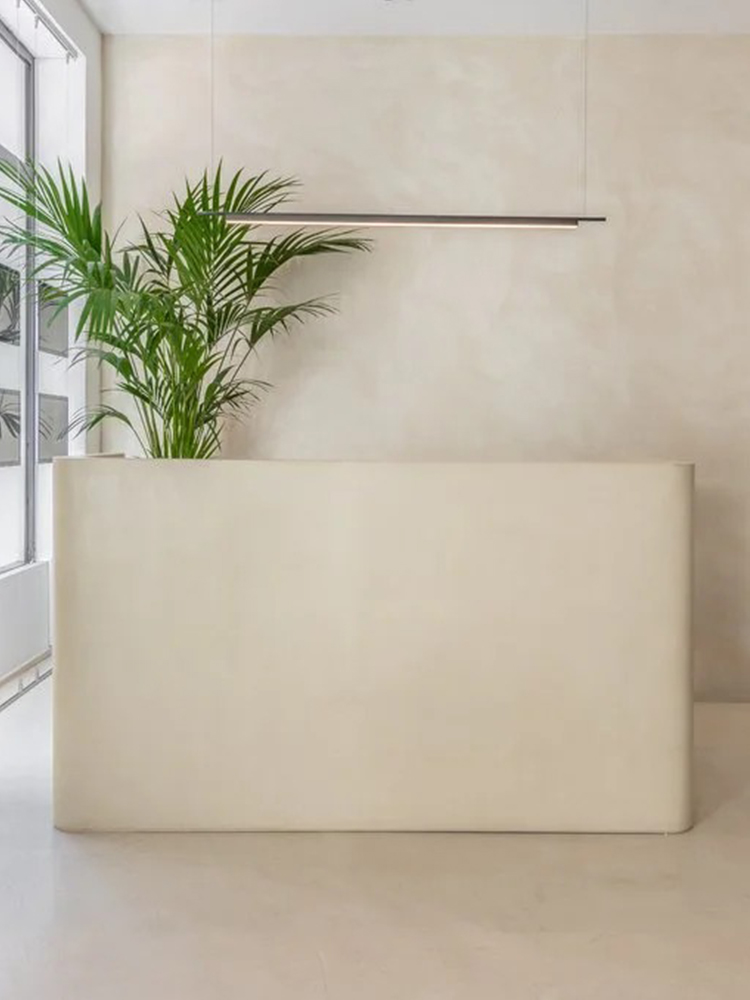
1. Durability Concerns: While strong, raw cementitious materials are porous. Without a high-quality, chemical-resistant sealing system, countertops can stain from oils, acids, and wines.
2. Cracking Risks: Substrate movement is the enemy of thin-finish coatings. If the underlying structure flexes or shifts, the microcement layer may crack.
3. Installation Complexity: Achieving a perfectly smooth, seamless finish requires skilled labor. Poor troweling techniques can result in uneven textures or visible joints.
To address these issues, contractors must select a product line that offers superior adhesion, flexibility, and a robust protective topcoat. The formulation of the microcement itself plays a critical role in its longevity and performance in high-traffic areas.
Comparing Microcement Countertops with Traditional Materials
When deciding on a surfacing solution, stakeholders often compare microcement against established options. Understanding the differences helps in making informed procurement decisions.
Selection Criteria for Procurement and Project Success

For distributors and contractors, sourcing the right microcement system is crucial. Not all products are created equal. When evaluating suppliers, consider the following criteria:
Formula Stability: Look for water-based, low-VOC formulations that comply with international environmental standards. This is essential for indoor air quality and meets green building certifications.
Adhesion Technology: The product must bond effectively to diverse substrates without extensive surface preparation. Superior adhesion reduces the risk of delamination.
Protective Topcoat: A dedicated, chemical-resistant sealant is non-negotiable for countertops. It should provide hydrophobic properties to repel water and oil, ensuring easy cleaning and stain protection.
Technical Support: Suppliers should offer comprehensive technical assistance, including color matching, application guidelines, and on-site support for complex projects.
Optimizing the Workflow for Contractors and Designers
Successful implementation of microcement countertops relies on a coordinated workflow. Designers should specify the texture and color early in the project to allow for sample approvals. Contractors must ensure the substrate is stable, clean, and properly primed. Applying the microcement in thin, even layers, followed by rigorous sanding and sealing, ensures a flawless finish.
For large-scale projects, such as hotel chains or residential developments, a unified supply of microcement for walls, floors, and countertops can streamline logistics and ensure visual cohesion. This full-scene approach reduces procurement complexity and guarantees consistent quality across all touchpoints.

Why Choose Us
At THE AIKE, we understand the unique demands of microcement countertop projects. Our expertise lies in providing reliable, high-performance solutions that meet the rigorous standards of global contractors and designers.
Advanced Waterproof & Stain-Resistant Formula: Our microcement system includes a specialized sealing topcoat that creates a complete waterproof barrier, protecting countertops from spills, oils, and daily wear.
Ultra-Thin, Lightweight Application: At just 2–3mm thick, our product eliminates the need for heavy substrate reinforcement, making it perfect for renovations and reducing structural load.
Comprehensive Technical Support: From color customization to step-by-step application guidance, our senior expert team ensures your project is executed flawlessly, minimizing waste and rework.
Global Compliance and Consistent Quality: As a manufacturer with 20+ years of experience, we deliver eco-friendly, VOC-free products that meet international standards, ensuring safety and sustainability for every project.
Contact us today for a free product sample and customized coating solution to elevate your next countertop project.
“ Contact AIKE Team ”
__________
在线留言
Name*
E-mail*
Country*
Application Areas*
Tel / WhatsApp
Requirement
Business Supervisor:Mr. Bin Zhu


Social media account


