
Microcement Fireplace: Skip the Demo
The Fireplace You Don't Have to Tear Out
Walk into most mid-century homes or renovated apartments and you'll find a fireplace that's seen better days—cracked ceramic tiles, peeling emulsion paint, a mantel nobody asked for. Tearing it out means three to four weeks of demolition, dust containment, a structural assessment, and a budget that quietly doubles. The microcement fireplace approach changes that math entirely. You keep the existing structure, transform the surface in days, and walk into a space that looks like it was designed that way.
What Actually Goes Wrong With Traditional Fireplace Refreshes
For contractors and interior designers, the real problem isn't aesthetics—it's the substrate. Existing fireplaces built in the 1980s through the 2000s sit on ceramic tile, basic stucco, or a patchwork of cement boards. Clients want a clean, monolithic finish—the seamless look you see in European boutique hotels and Middle Eastern hospitality projects—without stripping the base.
The usual options all carry a penalty:
Strip to brick and re-tile: 4–6 weeks, heavy dust, structural risk if the surround has hidden cracks, and a fire-permit re-inspection in most jurisdictions.
Paint over the old surface: A two-day job, but standard interior paint breaks down within 2–3 years near the hearth's radiant zone. You'll be back.
New prefab mantel over the old one: Hides the problem, adds 4–5 cm of depth, and interferes with door swings and adjacent cabinetry in tight living rooms.
A microcement fireplace avoids all three. The 2–3 mm finish bonds directly to tile, cement, gypsum board, and existing stucco. No demolition. No re-permitting. No structural exposure.
Applying Microcement to a Fireplace: What to Expect
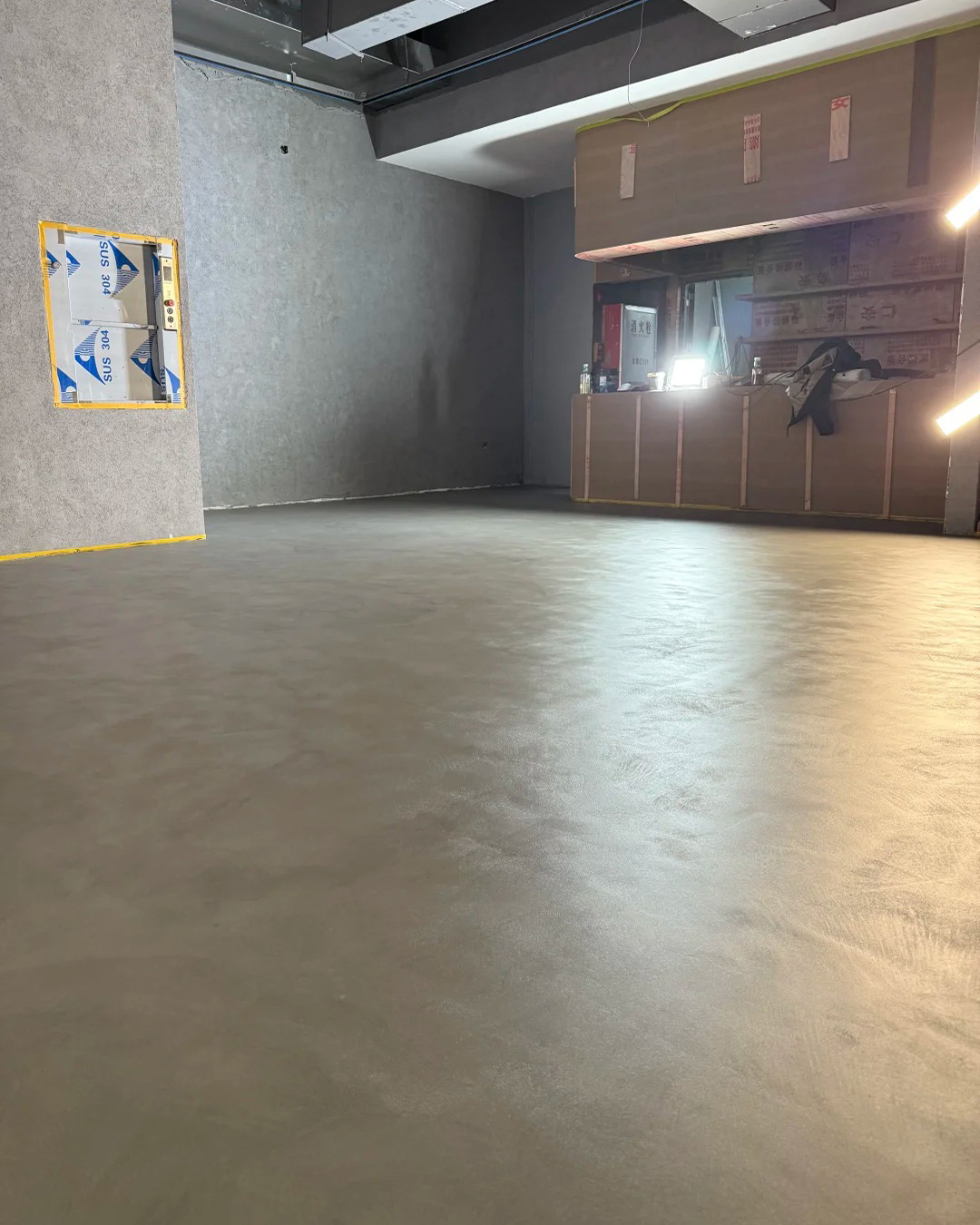
On a typical 3 m × 1.5 m fireplace face, a trained spray-plus-trowel crew completes the surface in three to four working days, including cure time. Here's what matters on the ground:
Heat-zone boundary. Apply microcement up to 60–80 cm from the firebox opening. Beyond that margin, the material performs at standard interior-wall ratings. Your builder should mark this line before the first coat.
Substrate prep. Existing tiles must be clean, dry, and free of loose material. Light mechanical keying (a diamond disc on an angle grinder) creates the bond; no sanding to bare brick.
Finish options. Matte, satin, or a light trowel-mark texture. Custom colour matching in RAL, NCS, or a designer's physical swatch.
Sealing top coat. A dedicated clear top layer adds scratch and scuff resistance—critical in commercial lobbies where delivery trolleys and hotel carts pass the hearth daily.
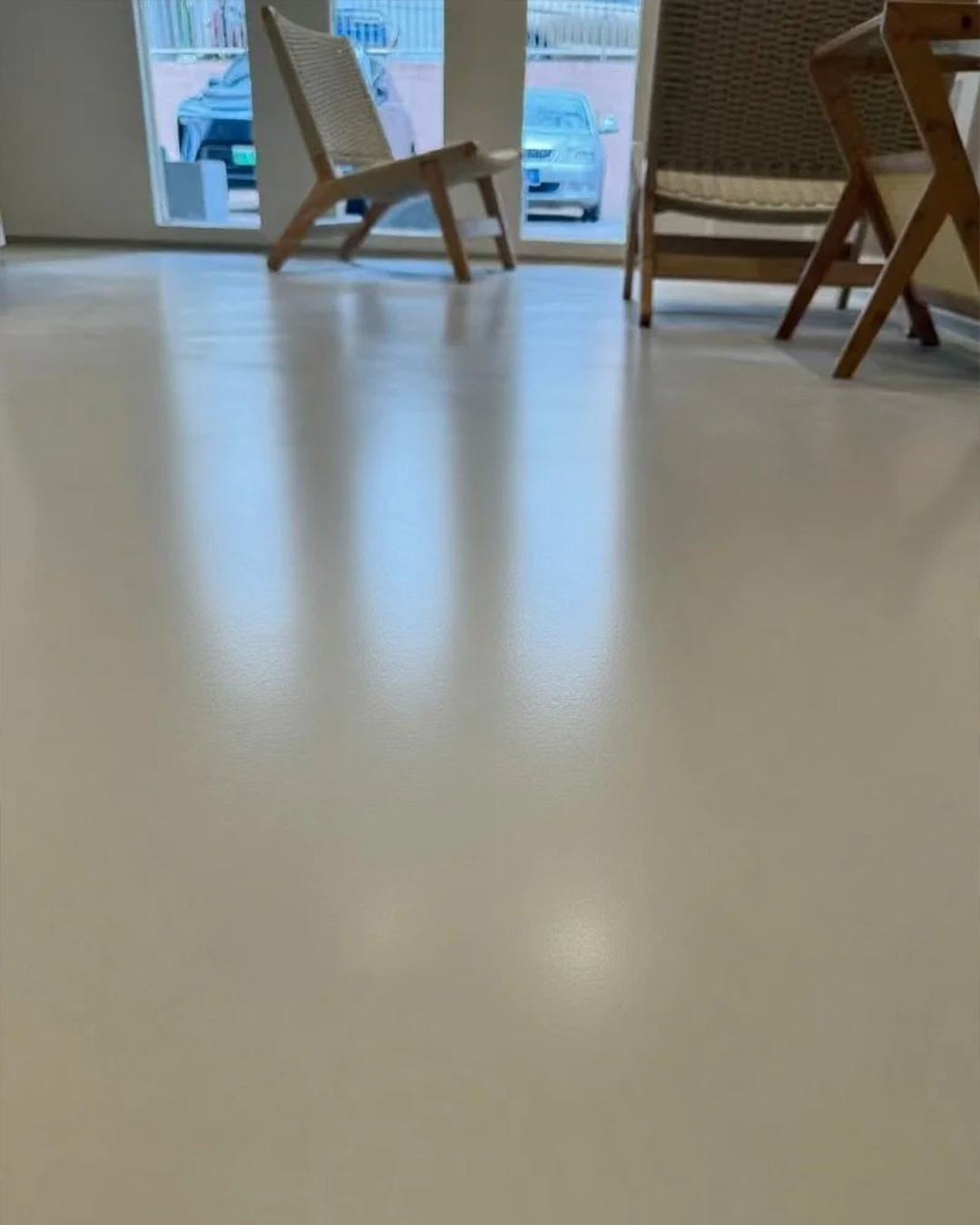
For multi-unit commercial projects (a hotel corridor with a dozen identical fireplaces, a restaurant with four hearths), the spray system drops per-unit labour by roughly 40 % and keeps the finish consistent across bays.
Pitting the Options Side by Side
The cost column assumes a like-for-like finish quality. A painted surface looks fine on day one; by year two, heat cycling and minor scuffs show. Microcement holds a consistent appearance well beyond a decade, which matters when a developer is selling a "low-maintenance" condo.
Where This Fits in a Real Project
A residential interior designer in Dubai specified microcement over a 1990s tile fireplace in a townhouse renovation. The client refused to close the living room for the tile strip. The trowel team keyed the existing tiles, applied two microcement coats, let 48 hours pass, then sealed. Three days later the hearth read as a seamless concrete-tone panel that matched the kitchen island. No fire-permit issue. No dust in the bedrooms. No re-tile call in three years.
In a 120-room boutique hotel in Lisbon, the contractor used the spray system on the 12 lounge fireplaces to keep the building open during a weekday renovation. Each hearth took under two days. The trowel pass added a subtle arched texture that tied into the room's terracotta palette.
The Short Version
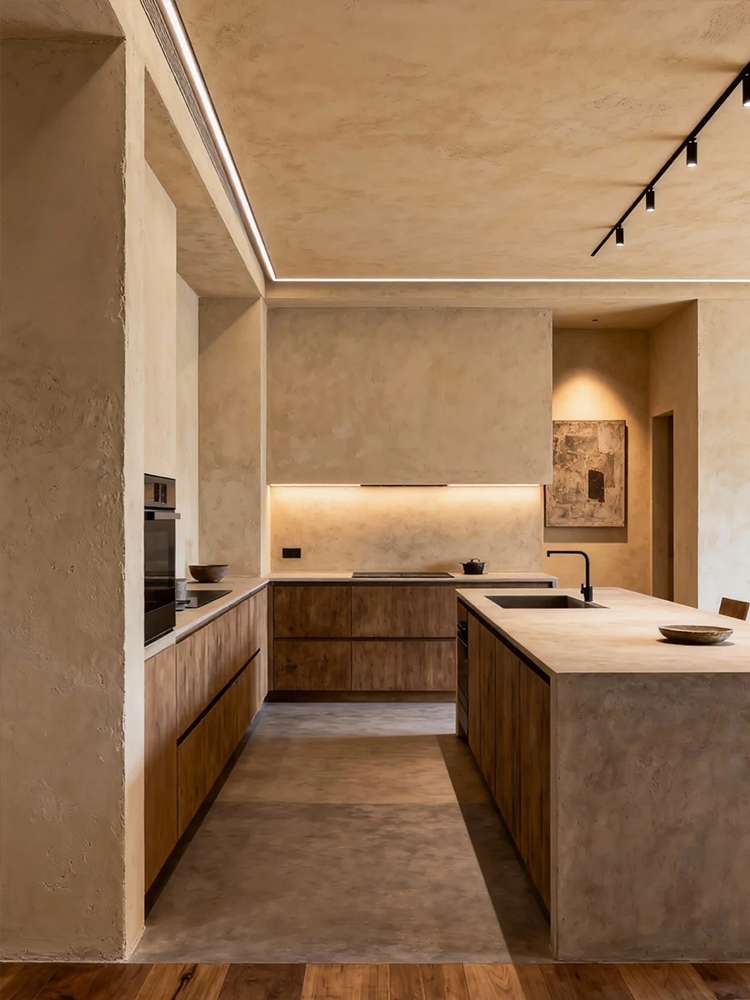
A microcement fireplace is a structural-preserving upgrade, not a cosmetic patch. It eliminates the demolition phase, keeps the building habitable during the work, and delivers a finish that outlastes paint by a wide margin. For designers it unlocks clean-line aesthetics on legacy substrates. For contractors it's a faster, lower-risk scope that slots into existing client budgets without a change order. The 2–3 mm thickness and direct-bond chemistry make it the most practical path from "dated 1990s hearth" to "editorial-grade feature wall" without opening the building to dust, delay, or re-permitting.
Why Choose THE AIKE for Microcement Fireplace Projects
One Supplier, Full Project. THE AIKE's product matrix covers your fireplace microcement, the surrounding accent walls, bathroom surfaces, and floor system under one roof. No batch-matching across four vendors, no "this microcement doesn't sit right next to that paint" surprises on site.
VOC-Free, Water-Based Formula. Every product line meets EU, US, and GCC green-building standards, so a LEED, BREEAM, or local green-certification audit doesn't trigger a separate indoor-air test for your hearth area.
Spray + Trowel Dual System. A single fireplace calls for trowel precision. A hotel corridor with twelve identical units calls for spray speed. THE AIKE supports both methods from the same product, so your crew isn't retrained between jobs.
20+ Years of Coatings and Construction Backing. Our expert team has specified and built microcement on live projects for over 16 years. Your sub-consultant gets on-site troubleshooting from people who've handled the heat-zone edge case, not a phone tree.
Contact us today for a free microcement fireplace sample,a colour-matched texture board, and a project-specific application timeline—no obligation, no sales pitch.
“ Contact AIKE Team ”
__________
在线留言
Name*
E-mail*
Country*
Application Areas*
Tel / WhatsApp
Requirement
Business Supervisor:Mr. Bin Zhu


Social media account


