
How Much Does Microcement Cost Per Square Metre? A 2026 Budget Guide for Contractors & Developers
Understanding the Real Price Tag of Microcement
When evaluating a project’s budget, few questions haunt procurement managers and general contractors more than: how much does microcement cost per square metre? Unlike standard paints or traditional tiles, microcement is not just a material; it is a complete finishing system. Consequently, pricing structures are complex and often misunderstood by those new to seamless finishes. For B2B buyers—whether you are sourcing for a boutique hotel in Dubai, a luxury apartment complex in London, or a retail chain in Singapore—the difference between a profitable margin and a loss-making job lies in understanding the true cost drivers.
This guide breaks down the actual expenses involved in microcement application. We move beyond simple material quotes to analyze labor, surface preparation, and geographic variables, providing a clear financial roadmap for your next project.
The Baseline Cost Range: What to Expect in 2026
To answer your primary question directly: the total installed cost of high-quality microcement typically ranges from $45 to $90 USD per square metre. However, this wide variance exists because "microcement" is a service as much as a product.
If you are looking strictly at material costs, a premium water-based system like THE AIKE’s Microcement might range from $8 to $15 per square metre. This includes the primer, two coats of base, and two coats of sealer. While this seems competitive against porcelain tiles (which can cost $20–$50 per sqm installed), the labor component tells a different story.
Labor usually accounts for 50–70% of the total project cost. Applying microcement requires skilled artisans who understand trowel techniques, drying times, and sealing nuances. In regions with higher labor costs, such as Western Europe or North America, the installed price can easily exceed $100 per square metre. In contrast, in Southeast Asia or parts of the Middle East, where skilled labor is more abundant,costs may sit closer to the $35–$50 per square metre range.
Key Factors That Drive Up or Down Your Costs
When asking how much does microcement cost per square metre, you must consider four critical variables that determine the final invoice. Ignoring these can lead to budget overruns and project delays.
1. Substrate Condition and Preparation
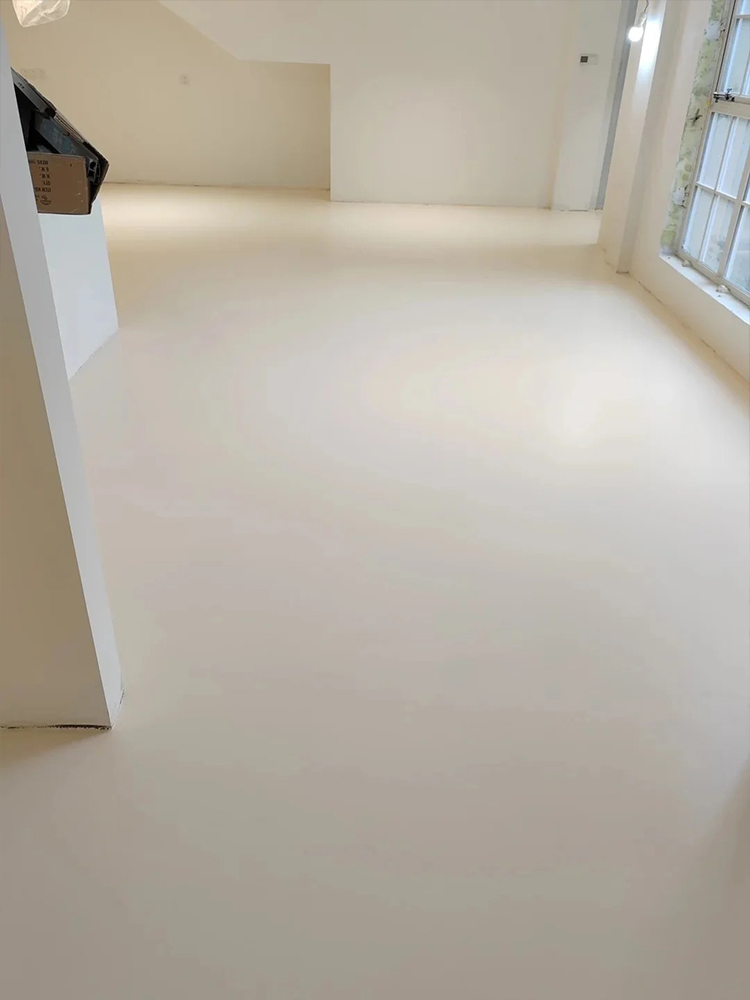
Microcement is thin (2–3mm). It cannot hide significant unevenness. If your existing substrate is cracked, unstable, or highly absorbent, extensive prep work is required. This may involve applying a fiberglass mesh, leveling compounds, or primers. For renovation projects, especially in older buildings, demolition and removal of old tiles can add $5–$15 per sqm to the total cost. Choosing a product with superior adhesion properties, such as THE AIKE’s specialized bonding agents, can sometimes reduce prep time by allowing direct application over sound tiles, saving both money and schedule days.
2. Complexity of the Surface Area
A large, open floor plan is significantly cheaper per square metre than a complex bathroom with multiple corners, niches, and curved walls. Labor hours increase exponentially with detail work. For contractors bidding on projects, always factor in a premium for intricate geometries. Commercial spaces with feature walls and columns require more precision, driving up the labor rate compared to standard residential flooring.
3. Sealant Quality and Durability Needs
Not all sealers are created equal. Standard polyurethane sealers are cost-effective but may require re-coating every few years in high-traffic areas. High-performance, cross-linked acrylic sealers (like those used in THE AIKE’s full-scene systems) offer superior stain resistance, waterproofing, and UV stability. While the initial material cost is higher, the lifecycle cost is lower. For developers, specifying a robust sealing system reduces long-term maintenance claims and warranty issues, protecting brand reputation.
4. Geographic Location and Logistics
Shipping heavy coating materials internationally impacts the landed cost. Import duties, freight charges, and storage fees vary by region. Buyers in remote locations or islands will face higher logistics premiums. Working with a supplier like THE AIKE, which has mature global export services and competitive positioning, helps mitigate these hidden costs. Their "Reasonable Price" philosophy ensures that you get premium quality without the inflated markups associated with niche, low-volume importers.
Material-Only vs. Installed: A Comparative Breakdown
To help you make informed decisions, here is a comparison of the cost structure between traditional tiling and microcement systems. This analysis highlights why microcement, despite a higher material/labor entry point, often offers better value for renovation and design-focused projects.
Note: Prices are indicative and vary by region. The table demonstrates that while upfront costs for microcement may seem higher, the elimination of grout maintenance and the ability to overlay existing surfaces often provide long-term savings.
Strategic Sourcing: How to Control Costs Without Compromising Quality
For distributors and developers, the question isn't just how much does microcement cost per square metre, but how can we secure a stable supply chain that protects our margins?
1. Choose a Single-Supplier System
Fragmented sourcing leads to compatibility issues. If your primer doesn’t bond with your base coat, the entire project fails. THE AIKE provides a complete, tested interior paint system. By sourcing the microcement, primer, and sealer from one manufacturer, you eliminate technical disputes and ensure performance consistency. This unified approach simplifies procurement and reduces the risk of costly callbacks.
2. Leverage Spray Technology for Large Projects
For commercial contracts, hotels, or large residential developments, manual troweling is slow and expensive. THE AIKE’s system supports a "Spray + Trowel" dual construction method. Using spraying equipment for the base coats can reduce labor time by up to 40% on large vertical and horizontal surfaces. This efficiency gain directly lowers the installed cost per square metre, making microcement competitive with paint on large-scale jobs.
3. Opt for Eco-Friendly, Low-VOC Formulas
Global regulations in Europe, North America, and increasingly in the Middle East are tightening around VOC emissions. Using non-compliant products can lead to fines or failed inspections. THE AIKE’s water-based, VOC-free formulas comply with international green standards. This avoids regulatory delays and appeals to high-end clients who prioritize health and sustainability, allowing you to charge a premium for "green" certification.
4. Partner for Technical Support
The biggest cost driver in microcement projects is error. Incorrect mixing ratios or skipping curing steps lead to cracking and peeling. A reliable supplier like THE AIKE offers full-process technical empowerment. Their senior expert team provides color matching, application guidance, and troubleshooting. Access to this support prevents waste and rework, effectively lowering the net cost of the project.
Conclusion

So, how much does microcement cost per square metre? The answer is dynamic, ranging from $45 to $90+ depending on labor, prep, and location. However, when you factor in the speed of installation (especially with spray options), the elimination of grout maintenance, and the versatility of renovating over existing substrates, the lifecycle value becomes undeniable.
For contractors and developers, the key to profitability lies in choosing a supplier that offers not just paint, but a complete, supported system. By selecting a partner with global expertise, competitive pricing, and robust technical support, you can control costs while delivering the seamless, high-end aesthetic that modern clients demand.
*
01.Why Choose Us
As a leader in the global coatings industry, THE AIKE Paint understands that your bottom line depends on reliability, efficiency, and cost-effectiveness. Here is how we deliver value specifically for microcement projects:
Complete System Integration: We provide a full-scene interior paint system, including our specialized Microcement, primers, and sealers. This ensures perfect compatibility, eliminating the risk of delamination and reducing warranty claims.
Cost-Efficient Application: Our products support both trowel and spray application methods. For large commercial and engineering projects, spraying significantly boosts efficiency, lowers labor costs, and accelerates project completion times.
Easy Renovation Overlay: Our superior adhesion allows direct application over existing tiles and concrete. This saves clients the high cost and disruption of demolition, making us the ideal choice for renovation and hardbound room upgrade projects.
Global Compliance & Support: Backed by 20+ years of expertise, we offer eco-friendly, VOC-free formulas that meet international standards. Our global export network and technical team ensure you receive full certification support and professional guidance from procurement to final touch-up.
Ready to optimize your project budget? Contact us today for a free product sample and customized coating solution to see how THE AIKE can transform your next build.
“ Contact AIKE Team ”
__________
在线留言
Name*
E-mail*
Country*
Application Areas*
Tel / WhatsApp
Requirement
Business Supervisor:Mr. Bin Zhu


Social media account


