
Microcement Shower: Waterproof?
The Question Every Contractor Hears in the First Meeting
A project manager in Doha just asked a bathroom client: "You want microcement on the shower walls—will it actually hold up against daily water?" That question, in some form, comes up on every wet-area project. The honest answer is: microcement is a decorative finish, not a waterproofing membrane. Stack it on a bare concrete wall and send in the shower head, and you will see delamination, mold at the joints, and warranty callbacks within two years. The fix is not "better microcement." The fix is a proper layered system, specified correctly from day one.
Three Layers That Actually Keep Water Out
A shower-grade microcement build has three non-negotiable layers:
1. Waterproof membrane (liquid-applied PU or cementitious). This goes on the prepared substrate before any decorative coat. It is the real barrier. Without it, water migrates behind the finish regardless of how thick the microcement is.
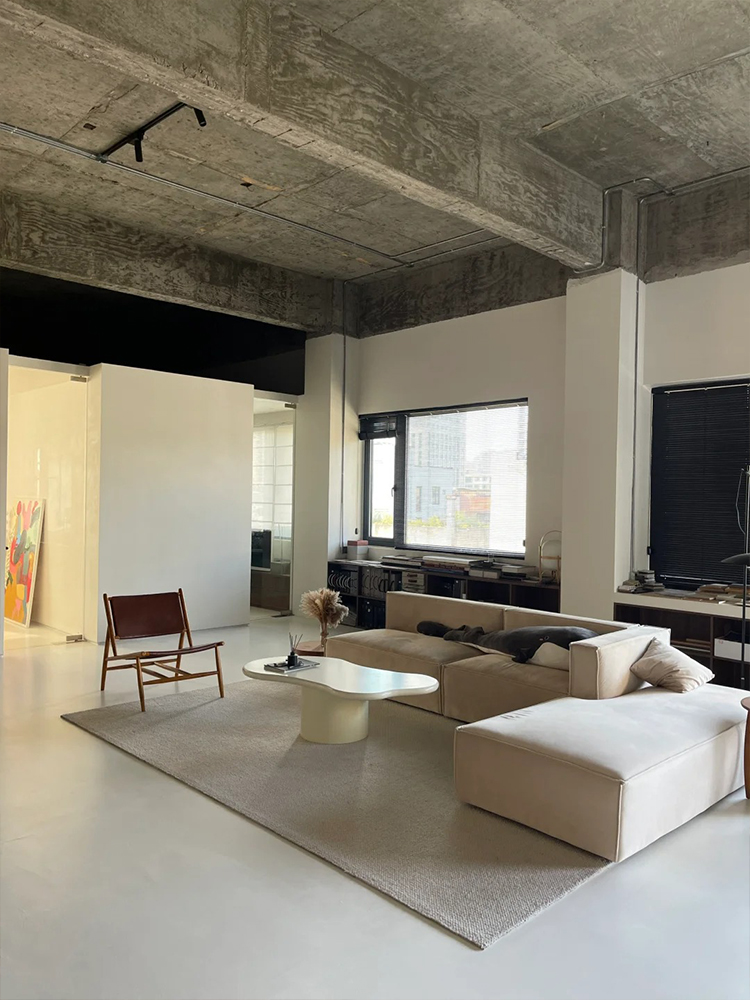
2. Waterproof-formulated microcement body (2–3 mm). Standard decorative microcement swells and loses adhesion in sustained humidity. A shower-specific formula resists moisture absorption without cracking. Apply by trowel for texture, or by spray on large walls to cut labor hours.
3. Sealing top coat (2–3 passes, PU or ceramic). This locks the surface, adds slip resistance, and closes any micro-pores in the body coat. Skipping the sealant is the single most common cause of "my microcement shower is failing."
Where the system performs well: walk-in stalls, shower walls up to 2.2 m, wet-room floors with a minimum 1.5° slope, and spa-style bathrooms. Where to think twice: tub surrounds with constant water pooling, or corners where the membrane cannot run continuously.
Standard Finish vs. Waterproof System: Side-by-Side

For a hotel chain specifying 200 guest bathrooms, that 35 % premium is absorbed quickly when you factor in the cost of pulling one bathroom's finish apart at month eighteen.
The Short Version
Microcement works in a shower when you build the waterproof membrane into the system from the start, pair it with a moisture-resistant body coat, and finish with a dedicated sealing top coat. For contractors, that layered spec is the difference between a one-off job and a reference project you can walk the next client through. For designers, it means the seamless, joint-free look survives real-world use instead of looking great only in the render.
Why Choose THE AIKE for Microcement Shower Projects
Closed waterproof system, one spec sheet. Our microcement pairs with a dedicated sealing top coat and is designed to be applied over a continuous membrane—no piecing together products from different suppliers.
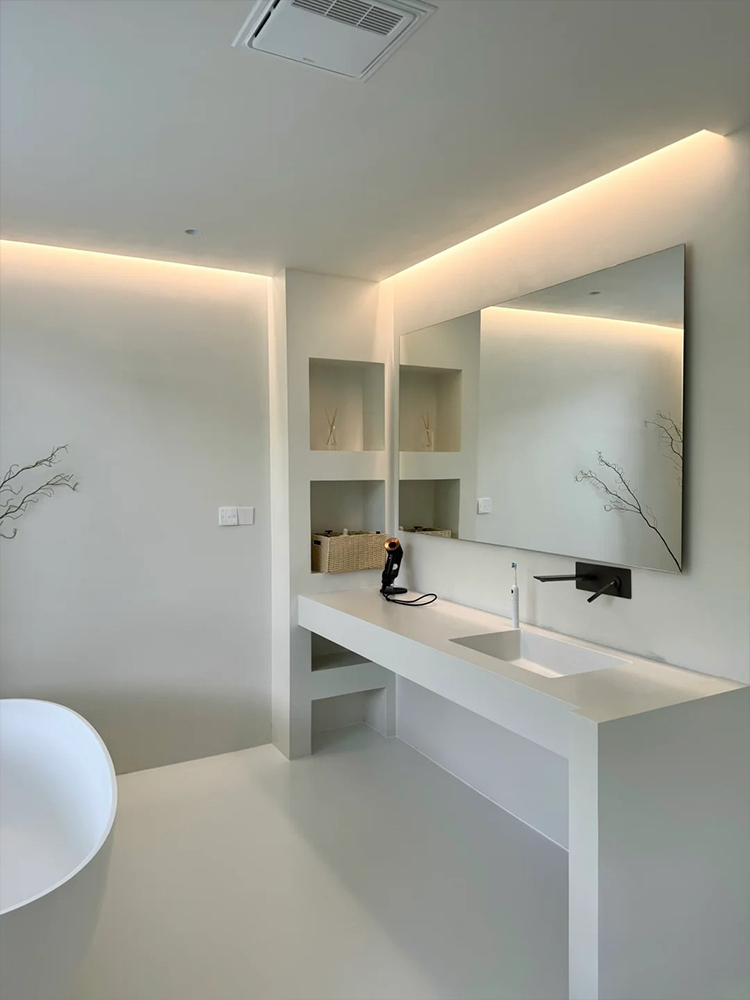
Apply over existing tiles or cement. No need to strip the old shower surface. Our formula bonds directly to ceramic, cement, and gypsum substrates,cutting demolition labor on renovation jobs by roughly 40 %.
Spray or trowel, your call. For multi-room hotel programs, spray application speeds up coverage and lowers skilled-labor dependency. For boutique spas, trowel work delivers the hand-finished texture a designer wants on a feature wall.
Export-ready documentation. Complete technical data sheets, compliance certificates, and step-by-step installation guides ship with every container, so your local inspectors and client files are covered from day one.
Ready to spec a waterproof microcement shower system for your next project? Contact us today for a free product sample, a substrate assessment guide, and a customized coating solution matched to your scope.
“ Contact AIKE Team ”
__________
在线留言
Name*
E-mail*
Country*
Application Areas*
Tel / WhatsApp
Requirement
Business Supervisor:Mr. Bin Zhu


Social media account


